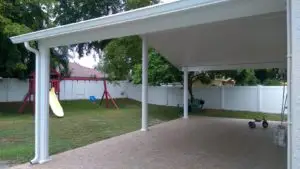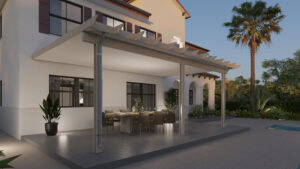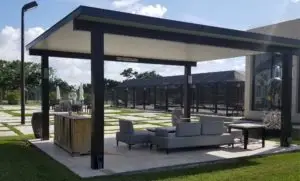
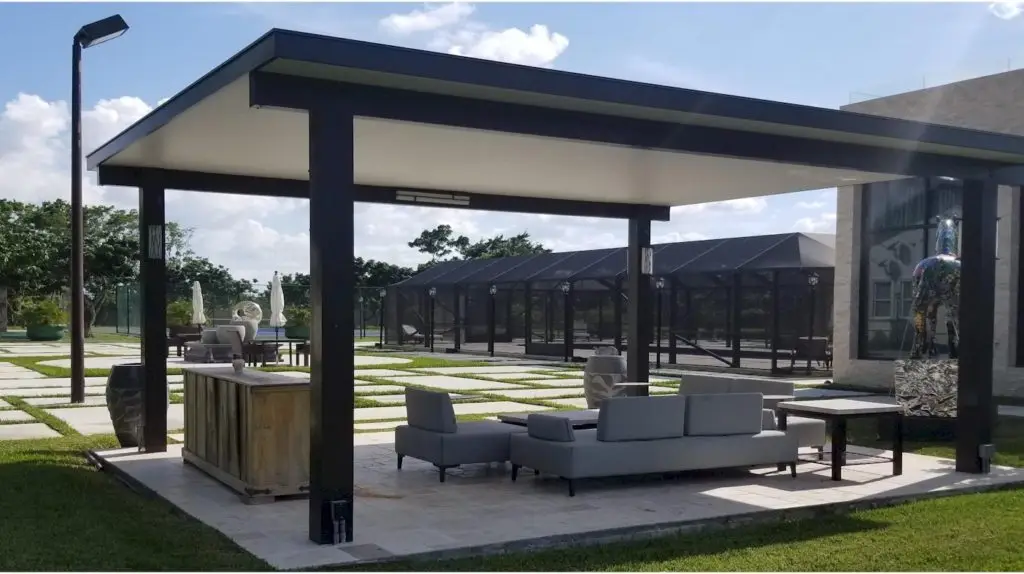
One of the first questions homeowners ask is simple: How much does a patio cover cost?
The honest answer is that the price depends on the size of the roof, the type of materials, the attachment method, the panel thickness, the delivery location, and whether the project is installed professionally or purchased as a DIY patio cover kit.
For Florida homeowners, cost is not the only thing that matters. A patio cover also needs to be planned for sun exposure, rain, wind requirements, attachment details, footing conditions, and local code considerations.
At Alumcenter LLC, we specialize in supplying DIY aluminum patio cover kits and insulated roof systems throughout Florida. Our goal is to help homeowners, contractors, and installers understand what affects pricing so they can plan a better project from the beginning.
Why Patio Cover Prices Vary
There is no one-size-fits-all price for a patio cover because every project is different.
A small attached patio cover with a short projection will usually cost much less than a large freestanding roof with thicker insulated panels, upgraded beams, taller posts, and special delivery requirements.
Before comparing prices, make sure you are comparing the same type of structure. A fabric canopy, wood pergola, insulated aluminum roof kit, and motorized louvered roof are completely different products with different costs, durability, and performance.
The mistake many homeowners make is asking only, “What is the cheapest option?”
The better question is:
What patio cover system gives me the right balance of shade, strength, comfort, durability, and cost for my Florida home?
Main Factors That Affect Patio Cover Kit Cost
1. Roof Size
The larger the patio cover, the more materials are needed.
Two measurements matter most:
Roof length — how wide the patio cover runs across the home or outdoor space.
Projection — how far the roof extends outward from the house or support beam.
A deeper projection may require thicker panels, larger beams, additional posts, or stronger support details. That is why a 10-foot projection and a 20-foot projection cannot be priced the same way.
2. Panel Thickness
Insulated aluminum roof panels are commonly available in different thicknesses, such as 3-inch, 4-inch, and 6-inch panels.
The correct panel thickness depends on the span, roof projection, support layout, wind requirements, and project design.
In many cases:
3-inch panels may work for smaller or shorter-span patio covers.
4-inch panels can provide added strength and insulation for larger covers.
6-inch panels are often used when longer spans or stronger structural performance are needed.
Do not choose panel thickness only by price. A cheaper panel that does not fit the project requirements can create bigger problems later.
3. Attachment Type
How the patio cover connects to the home has a major impact on the design and cost.
Common attachment types include:
- Wall-attached
- Fascia-attached
- Freestanding
- Roof-mounted or special-condition attachments
- L-shaped or custom layouts
A simple wall attachment may be more straightforward. A freestanding patio cover may require more posts, beams, footing details, and engineering review.
The attachment type should be selected based on the home’s structure, not just appearance.
4. Beam and Post Requirements
Beams and posts are not just decorative. They carry the load of the roof system.
The size and number of beams and posts may change depending on the roof projection, panel thickness, wind requirements, post height, and support spacing.
For example, a larger patio cover may need upgraded beams or larger posts to support the structure properly. These upgrades can increase cost, but they may be necessary for the project.
5. Engineering and Permitting
Florida patio cover projects may require permits, engineering, or local building department review depending on the city, county, structure size, attachment method, and project location.
Even when using Florida-approved components, some projects may still require site-specific engineering or signed and sealed drawings.
This is one area where homeowners should not guess. Local requirements can affect footing details, attachment methods, wind design, and final approval.
6. Delivery Location
Delivery can also affect the total project cost.
A patio cover kit includes long panels, beams, posts, gutters, fascia, and other materials that must be transported carefully. Delivery pricing may vary depending on the address, route, material size, access conditions, and whether the project is located near an existing delivery area.
For Florida customers, delivery planning is an important part of the quote.
7. Optional Upgrades
Additional features can improve the patio cover but may also affect the price.
Common options include:
- Fan beams
- Gutters and downspouts
- White or bronze frame color
- Larger posts
- Larger beams
- Screen wall components
- Higher post heights
- Special layout adjustments
- Additional hardware or trim
These options should be discussed early. It is usually easier and cleaner to plan upgrades before the kit is ordered.
DIY Patio Cover Kit vs. Professional Installation
A major cost difference comes down to whether you buy a DIY patio cover kit or hire a contractor for a full installation.
A DIY kit can help reduce the total cost because you are purchasing the materials and handling the installation separately. Some customers install the kit themselves. Others hire a local contractor, handyman, or experienced installer.
This gives the homeowner more control over the project cost.
However, DIY does not mean careless. The structure still needs to be installed correctly, safely, and according to the project requirements.
A full professional installation may cost more, but it may be the better choice for homeowners who do not have the tools, experience, time, or confidence to manage the installation.
Material Comparison
Different patio cover materials come with different costs and long-term tradeoffs.
| Material | Benefits | Drawbacks |
|---|---|---|
| Fabric / Canopy | Low upfront cost, temporary shade | Less durable, limited wind and rain protection |
| Wood | Traditional appearance | Requires maintenance, can rot, warp, or attract termites |
| Vinyl | Lower cost and lightweight | Less structural strength and fewer premium design options |
| Aluminum Pergola | Clean look, low maintenance, partial shade | Does not provide full rain protection |
| Insulated Aluminum Roof | Strong shade, rain protection, low maintenance | Higher upfront cost than basic shade options |
| Louvered Roof | Adjustable shade and premium appearance | Usually much higher cost and more complex installation |
For many Florida homeowners, an insulated aluminum patio cover kit offers the best balance of durability, comfort, appearance, and long-term value.
What Is Usually Included in a DIY Patio Cover Kit?
Every project is different, but a typical patio cover kit may include:
- Insulated roof panels
- Aluminum beams
- Aluminum posts
- Wall header or attachment materials
- Fascia
- E-gutter
- Downspouts
- Fasteners and hardware
- Sealants or related installation materials
- Fan beams, if included in the design
The final material list depends on the size, layout, attachment type, panel thickness, color, and project requirements.
What May Not Be Included
Homeowners should also understand what may not be included in the kit price.
Depending on the project, additional costs may include:
- Installation labor
- Concrete footings
- Permit fees
- Engineering drawings
- Electrical work
- Ceiling fans or light fixtures
- Site preparation
- Equipment rental
- Removal of old structures
- Screen walls or enclosure upgrades
- Crating or freight coordination, if applicable
This is why a cheap material quote can be misleading. The real cost of the project is the total cost to complete it properly.
How to Get a More Accurate Patio Cover Quote
To get a better quote, be ready to provide clear project information.
Alumcenter LLC typically needs:
- Roof length
- Roof projection
- Attachment type
- Desired post height
- Panel thickness preference, if known
- Frame color preference
- Complete delivery address
- Photos of the installation area
- Sketch or layout with measurements
Photos matter. They help show the wall, fascia, roofline, slab, pavers, gutters, windows, doors, and any obstacles that may affect the design.
The more accurate the information, the more accurate the quote.
Do Not Compare Patio Cover Quotes Blindly
Not all quotes include the same materials, thickness, support details, delivery terms, or code-related assumptions.
Before choosing the lowest price, compare:
- Panel thickness
- Beam size
- Post size
- Gutter and downspout inclusion
- Delivery cost
- Hardware inclusion
- Engineering assumptions
- Attachment method
- Support spacing
- Warranty terms
- Material quality
A cheaper quote may not be cheaper if it leaves out key components or uses a weaker configuration.
Long-Term Value
A patio cover is not just a purchase. It is an upgrade to how you use your home.
A well-planned patio cover can create a shaded outdoor living area, protect furniture, improve comfort, reduce direct sun exposure, and make the backyard more useful throughout the year.
The best value comes from choosing a system that fits your home, your budget, and your local requirements — not simply the cheapest material package.
Start with the 3D Patio Cover Designer
The easiest way to begin is by using Alumcenter LLC’s 3D Patio Cover Designer.
You can enter your dimensions, select your layout, review options, and start building a clearer idea of your patio cover project. From there, our team can review the details and help prepare a quote based on your specific design.
This helps reduce guessing and makes the quote process more efficient.
Final Thoughts
So, how much does a patio cover kit cost in Florida?
It depends on the size, panel thickness, attachment type, materials, delivery location, engineering needs, and installation plan.
A DIY insulated aluminum patio cover kit can be a smart way to control costs while still creating a durable and attractive outdoor roof system. But the project should be planned carefully. Florida weather, wind requirements, footing details, and attachment methods all matter.
Alumcenter LLC supplies DIY aluminum patio cover kits throughout Florida and helps homeowners, contractors, and installers choose the right materials for their outdoor living projects.
To get started, use our 3D Patio Cover Designer or contact Alumcenter LLC at (954) 674-2631.