
Florida patio covers need more than good looks. They need materials that are selected for real outdoor conditions, including intense sun, heavy rain, humidity, and wind exposure.
That is why panel thickness, foam density, aluminum skin thickness, beam size, post spacing, attachment method, and footing details all matter when planning a patio cover kit.
At Alumcenter LLC, we supply DIY aluminum patio cover kits and insulated roof systems throughout Florida. Our goal is to help homeowners, contractors, and installers choose the right patio cover materials for the size, span, layout, and project conditions.
A patio cover is not just a shade structure. It is an outdoor roof system that must be planned carefully, especially in Florida.
The right roof panel must be matched to the project. A small backyard patio cover may not need the same panel thickness as a larger freestanding carport or a wide-span outdoor roof system.
Choosing the wrong panel to save money can create problems later. The structure may need additional beams, closer post spacing, thicker panels, stronger hardware, or site-specific engineering depending on the project.
This is where proper planning protects the investment.
Insulated aluminum roof panels are commonly available in different thicknesses. The most common options are 3-inch, 4-inch, and 6-inch panels.
Each option serves a different purpose depending on the span, roof projection, support layout, wind requirements, and design needs.
| Panel Thickness | Common Use | General Benefit |
|---|---|---|
| 3-inch insulated panels | Smaller patios and screen rooms | Cost-effective option for shorter spans |
| 4-inch insulated panels | Larger patios and stronger layouts | Balanced option for strength, insulation, and design flexibility |
| 6-inch insulated panels | Larger spans, carports, and heavier-duty projects | Stronger option when longer spans or added performance are needed |
These are general guidelines. The correct panel should always be selected based on the actual project requirements, not just preference.
Insulated patio roof panels are typically made with aluminum skins bonded to a foam core. The combination of panel thickness, foam density, and aluminum skin thickness affects performance.
Important factors include:
A thicker panel may allow for longer spans in certain configurations, but that does not mean every 6-inch panel can automatically span the same distance on every project. Wind zone, attachment type, exposure, and support layout still matter.
| Feature | 3-inch Panel | 4-inch Panel | 6-inch Panel |
|---|---|---|---|
| Typical Application | Smaller patio covers, screen rooms | Larger patios, upgraded residential projects | Longer spans, carports, larger roof systems |
| Strength Level | Good for shorter spans | Stronger mid-range option | Strongest common panel option |
| Cost Level | Lower | Mid-range | Higher |
| Design Flexibility | Standard layouts | More flexibility | Best for larger or more demanding layouts |
| Best For | Budget-conscious patio covers | Homeowners wanting added strength | Projects needing longer spans or stronger performance |
This table should be used as a planning guide only. Final design should be reviewed based on the actual project.
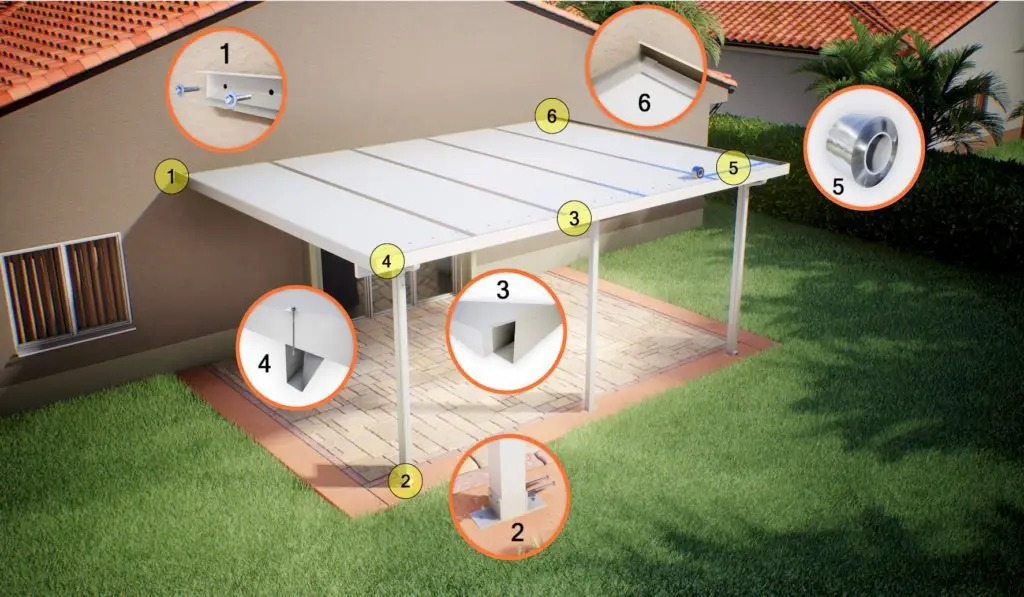
The roof panel is only one part of the structure. Beams, posts, connection details, fasteners, gutters, and footings also affect the overall performance of the patio cover.
Depending on the project, stronger configurations may include:
A strong patio cover is not created by one component alone. It comes from matching the entire system to the project.
Many patio cover systems use Florida-approved components, but homeowners need to understand what that means.
Florida Product Approval can help show that certain components meet approved testing or design standards. However, it does not automatically mean every project is ready for permit approval.
A local building department may still require site-specific engineering, signed and sealed drawings, footing details, attachment details, and wind-load calculations based on the project address.
This is especially important for larger roofs, freestanding covers, carports, coastal areas, high-wind regions, or projects requiring permits.
Span is one of the most important factors in patio cover design.
The span refers to how far the roof panel can extend between supports. Larger spans usually require stronger panels, larger beams, additional posts, or different support spacing.
For example, a smaller patio cover with a short projection may be able to use a lighter configuration. A deeper projection may require thicker insulated panels or a carry beam to properly support the structure.
This is why accurate measurements are critical before ordering a patio cover kit.
It is tempting to choose the cheapest panel option, but that can be a mistake.
A lower-cost panel may work perfectly for a small patio cover. But if the roof projection is too large or the support spacing is too wide, the project may need a stronger configuration.
The smarter approach is to ask:
What panel thickness, beam size, and support layout are appropriate for this specific project?
That question matters more than simply choosing the lowest material cost.
To help prepare a better patio cover kit quote, Alumcenter LLC typically needs:
Photos are extremely important because they show the attachment area, slab or pavers, roofline, gutters, doors, windows, and other conditions that may affect the design.
The easiest way to begin planning is with Alumcenter LLC’s 3D Patio Cover Designer.
You can enter your dimensions, review layout options, and start visualizing your patio cover before requesting a quote. From there, our team can review the project details and help guide you toward the right material configuration.
This helps reduce guessing and gives the project a stronger starting point.
Strong roof panels are essential for Florida patio cover kits, but panel thickness is only one part of the design.
A properly planned patio cover should consider the panel type, foam core, aluminum skin thickness, beam size, post spacing, attachment method, footing requirements, wind conditions, and local code requirements.
For Florida homeowners, contractors, and installers, the goal should be simple: choose the right system for the project, not just the cheapest option.
Alumcenter LLC supplies DIY aluminum patio cover kits and insulated roof systems throughout Florida, helping customers plan durable outdoor roof systems with the right materials for their space.
To get started, use our 3D Patio Cover Designer or contact Alumcenter LLC at (954) 674-2631.